The name Vanderbilt is associated with Horley for the simple reason that Alfred Vanderbilt ran a pair of stage coaches (Meteor & Venturer) from London to Brighton in the early 1900’s and used The Chequers Hotel (now disgracefully renamed The Halt and Pull) on the A23 to change horses and refresh his passengers. This was not a strictly commercial service and was deliberately priced to keep the general public away. These journeys were essentially a jolly day out for the gentry. We had now entered the motorised era of motoring and the first London to Brighton Car Run had taken place in 1896.
From The Chequers the route would have continued to Povey Cross and then south across what is now Gatwick Airport via Lowfield Heath and southwards via Crawley towards Brighton.
He also used other routes via Epsom and Dorking.
This was long after the heyday of the stage coach travel era which had really ended by the mid 1800’s.
The most celebrated event associated with this journey took place in 1888 when, at Ascot, a wager of a thousand guineas to 500 was made that a coach could not be driven to Brighton and back in eight hours, the one way record then standing at four hours, 21 minutes. James Selby, a well known professional coachman, partner in a coachbuilding concern and somewhat of a public character of the time, took up the challenge. At 10.0 o`clock on 13th July his `Old Times` departed the White Horse Cellars with six passengers plus guard, all experienced `whips` themselves. Police had been briefed to keep key intersections clear whilst ostlers changed teams sixteen times, often in record time and in one case taking only 40 seconds!
Never once leaving the box and pausing at the `Old Ship` at Brighton only sufficient to record the event, Selby arrived back in Piccadilly ten minutes within the challenge and with `half London` turned out to see him pull up.
For many years Mail was delivered from London via a stage coach. This service ended on 1st June 1905.

The last Mail stagecoach on Clayton Hill – 1st June 1905.
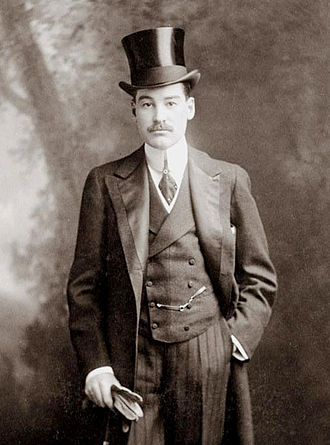
Alfred Gwynne Vanderbilt Sr. (October 20, 1877 – May 7, 1915) was an American businessman and member of the Vanderbilt family. A sportsman, he participated in and pioneered a number of related endeavours. He is believed to have died in the sinking of the RMS Lusitania.
During the 19th century a great deal of enthusiasm for horse drawn coaching arose amongst some very wealthy enthusiasts who began forming clubs to show off their horses and coaches and holding competitions. These activities soon became known as the London Coaching Season. In 1907 Vanderbilt brought over from his Oakland Farm in the United States 26 coaching horses for the first International Horse Show. His horses were considered ‘coarse’ by his English counterparts and not of the standard they were used to, never the less he won many of his events.
He started to entertain his friends by driving them, in his horse drawn coaches, from London to Brighton using a relay of horses. He enjoyed this coach driving so much that from 1908 he started a regular, but seasonal, London to Brighton service using a coach named “Venture”. The coach ran from London to Brighton one day and returned the next. Vanderbilt is reported to have often driven the coach himself “dressed as for Ascot races, complete with grey top hat“.
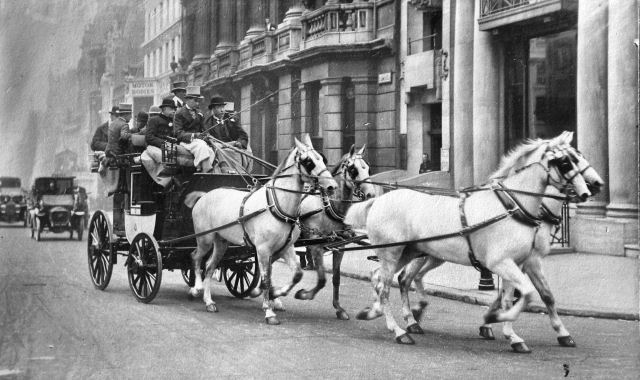
Leaving St James’s Street, London
Vanderbilt was a member of the Coaching Club of New York and his coach, which was named Venture, was custom built in 1903 by coachbuilders Brewster & Co. The coach was actually a “heavy park drag – made road style” and was eventually restored by the Preservation Society of Newport County and is on display at The Breakers, Rhode Island.
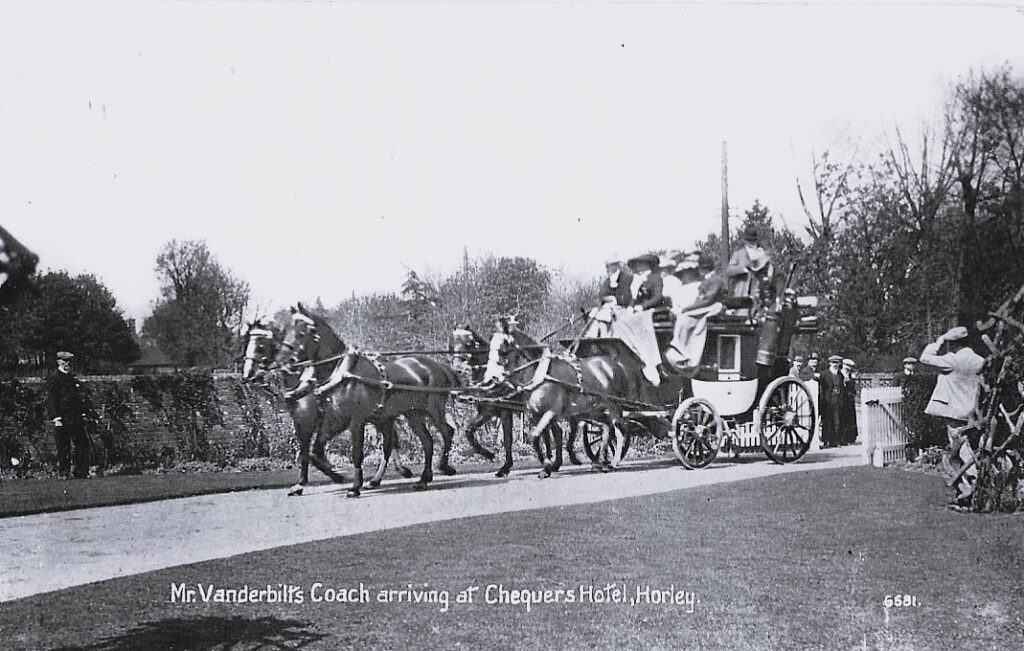
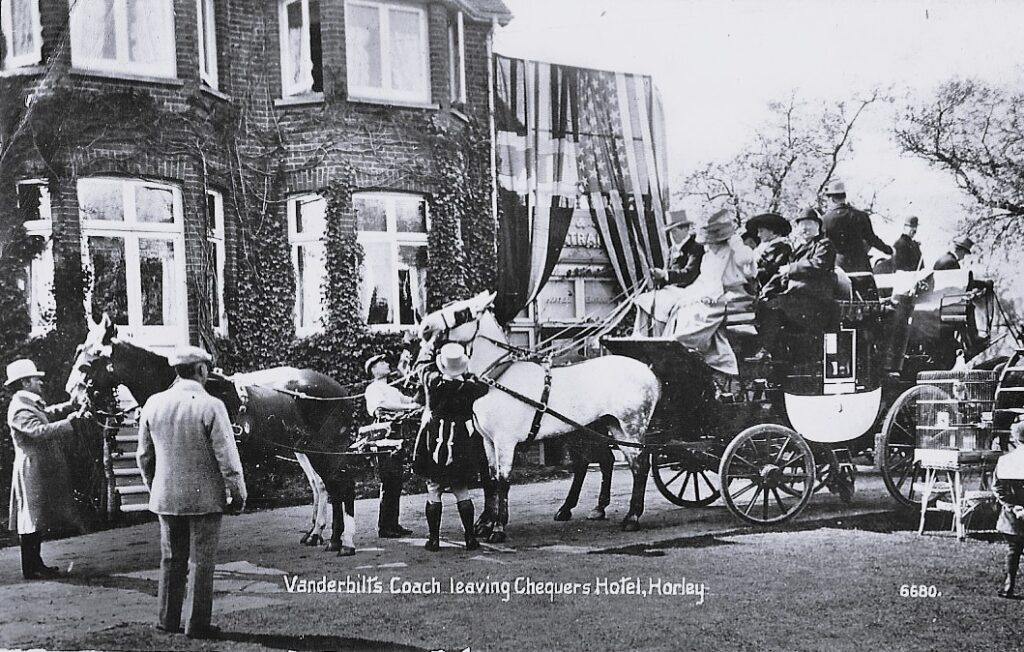
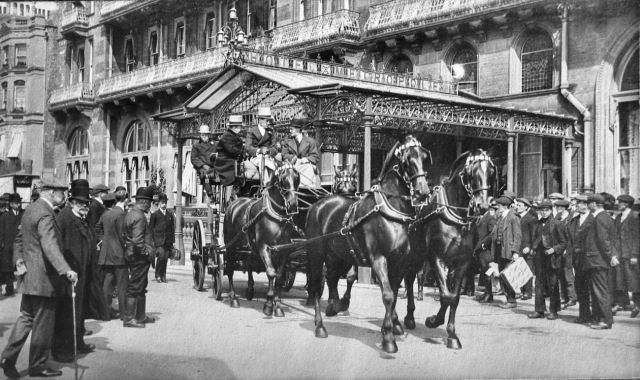
Arriving at the Metropole Hotel, Brighton.
On May 1, 1915, Vanderbilt boarded the RMS Lusitania bound for Liverpool as a first class passenger. It was a business trip, and he travelled with only his valet, Ronald Denyer, leaving his family at home in New York.
On May 7, off the coast of County Cork, Ireland, German U-boat, U-20 torpedoed the ship, triggering a secondary explosion that sank the giant ocean liner within 18 minutes. Vanderbilt and Denyer helped others into lifeboats, and then Vanderbilt gave his lifejacket to save a female passenger. Vanderbilt had promised the young mother of a small baby that he would locate an extra lifejacket for her. Failing to do so, he offered her his own life vest, which he proceeded to tie on to her himself, since she was holding her infant child in her arms at the time. Many considered his actions especially noble since he could not swim and he knew there were no other life vests or lifeboats available. Because of his fame, several people on the Lusitania who survived the tragedy were observing him while events unfolded at the time, and so they took note of his actions. He and Denyer were among the 1,199 passengers who did not survive the incident. His body was never recovered.
There has been some historical confusion as to which member of the Vanderbilt family was booked on the Titanic in 1912 and recent studies have determined that his uncle George Washington Vanderbilt II was actually booked to travel on the Titanic along with his wife Edith and daughter Cornelia, not Alfred Vanderbilt.
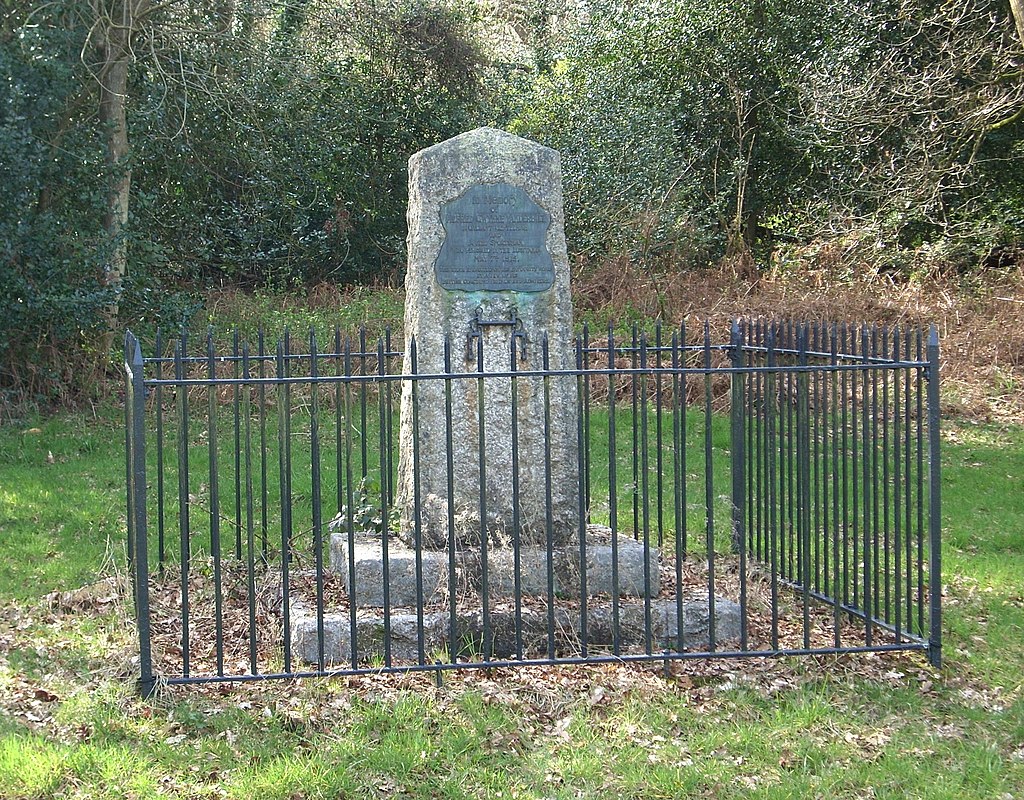
Memorial to Alfred Gwynne Vanderbilt
A memorial to Vanderbilt was erected on the A24 London to Worthing Road in Holmwood, just south of Dorking.
The inscription reads, “In Memory of Alfred Gwynne Vanderbilt a gallant gentleman and a fine sportsman who perished in the Lusitania May 7th 1915. This stone is erected on his favourite road by a few of his British coaching friends and admirers”.
The memorial carries an image of a horse’s bit.
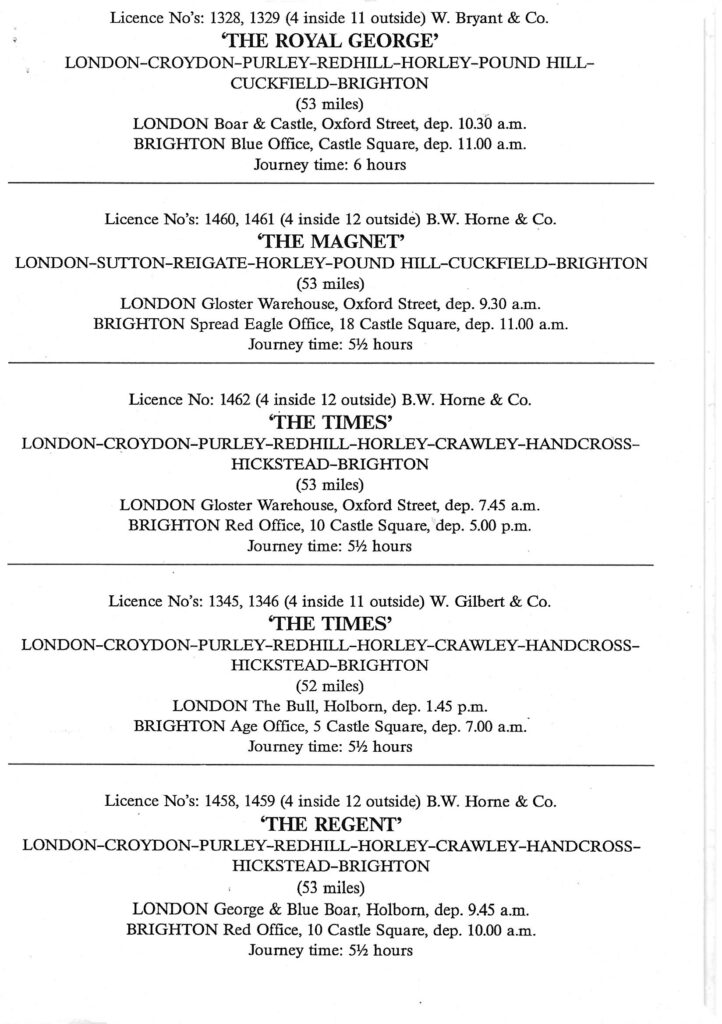
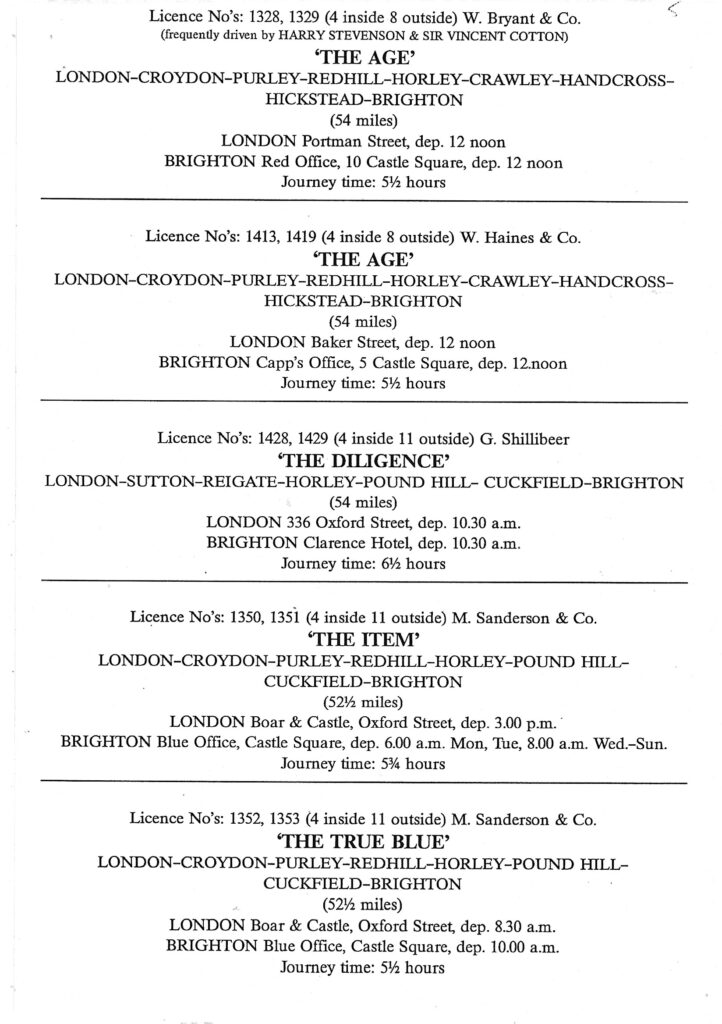
Below are some examples of the journeys made by coaches in this era which gives an idea of the routes and journey times involved.
This article was composed by Doug Cox, 2 April 2024 with material from the HLHS archive, Wikipedia and other sources.